Archives by date

You are browsing the site archives by date.

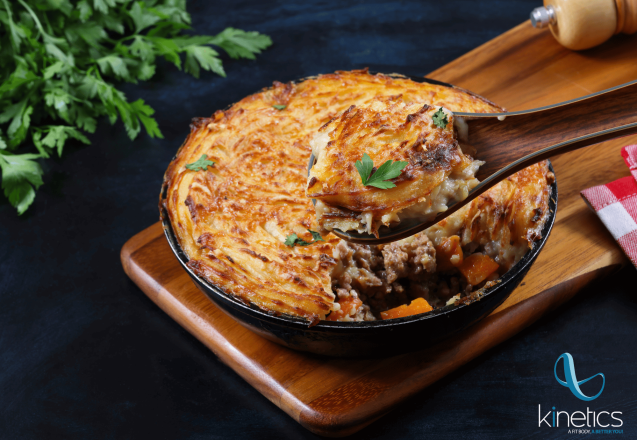
Lentil & Beef Gratin
Lentil & Beef Gratin

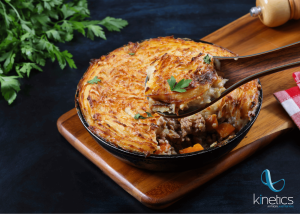
This hearty recipe combines the earthy flavors of lentils and tender shredded beef with a creamy, cheesy mashed potato topping. It is a comforting, protein-packed meal that is perfect for sharing with family and friends on a cozy evening.

Ingredients

2 cups cooked lentils

1 lb cooked shredded beef or grounded meat

1 cup grated carrots

1 small white onion, finely chopped

2 cloves garlic, minced

2 medium tomatoes, blended or finely grated

1 tbsp vegetable oil

Salt and pepper to taste

2 cups prepared mashed potatoes

1 cup of prepared mashed butternut squash

½ cup shredded cheese

Instructions

  1. Preheat your oven to 390°F (200°C). 
  2. In a large skillet, heat the vegetable oil over medium heat and sauté the chopped onion and minced garlic until the onion becomes translucent and fragrant. 
  3. Add the shredded beef and cook until the meat is almost done
  4. Incorporate the grated carrots, blended tomatoes and the cooked lentils, stirring well to combine.
  5. Simmer for a few minutes until the sauce thickens slightly and the flavors meld. 
  6. Season the mixture with salt and pepper to taste. 
  7. Pour the beef and lentil mixture into a glass baking dish or oven-proof casserole, spreading it out into an even layer. 
  8. In a separate bowl, mix the prepared mashed potatoes and butternut squash. Then spread this topping carefully over the lentil and meat base. 
  9. Sprinkle the cheese over the top and bake for approximately 10 minutes, or until the cheese is melted and starts to turn a beautiful golden brown. 
  10. Serve hot and enjoy with a side salad.


Nutrition facts per serving (300 g, 10.5 oz):

Calories 341 kcal, Fat 13.2 g, Carbohydrates 28.7 g, Dietary Fiber 6.7 g, Sugars 4.6 g, Protein 27.9 g, Sodium 439 mg.


Not making progress? - This might be why

Not making progress? – This might be why

How to train hard and smart. The power of progressive overload

Getting stronger isn’t about doing more just for the sake of doing more. It’s about doing things a little better, a little harder, and a little smarter over time.

That’s where progressive overload comes in—the foundational principle behind strength, muscle growth, and long-term performance.


What is progressive overload?

Progressive overload means gradually increasing the demands placed on your body so it has a reason to adapt. When muscles are challenged slightly beyond what they’re used to, they respond by getting stronger, more efficient, and more resilient.

Without progression, the body adapts—and then plateaus.


Why your body needs it

When a workout becomes familiar, it requires less effort and produces fewer results. Progressive overload keeps the stimulus fresh and effective by:

  • Building strength and muscle safely over time
  • Improving bone density and joint resilience
  • Boosting confidence and motivation through measurable progress
  • Reducing injury risk compared to random or excessive jumps in intensity

This is how we train hard and train smart.


Smart ways to apply progressive overload

Progress doesn’t always mean adding more weight. There are many effective—and safer—ways to progress:

  • More weight
    Gradually increase resistance once current loads feel controlled and strong.
  • More reps
    Keep the same weight, but perform more repetitions with good form.
  • More sets
    Add an extra round to increase total training volume.
  • Better form and control
    Slower tempo, better range of motion, and improved technique increase challenge without increasing load.
  • Reduced rest time
    Shortening rest periods increases intensity and cardiovascular demand.

Small changes add up. Progress is built one intentional step at a time.


Progression ≠ rushing

More is not always better. Pushing too hard, too fast can lead to fatigue, stalled progress, or injury. The goal is consistent, sustainable improvement, not burnout.

At Kinetics, we focus on meeting your body where it is—and guiding it forward with purpose.


Here’s your challenge

This week, choose one exercise and progress it in just one way:

  • Add 1–2 reps
  • Improve depth or control
  • Reduce rest slightly
  • Increase weight only if form stays solid


Call to action

Not sure how—or when—to push a little more? That’s what coaching is for.

Reply to this email or reach out to us after your next class at Kinetics. We’ll help you build a program that challenges your body, respects your recovery, and supports long-term strength—so you can train hard, train smart, and keep moving forward.


Healthy Baked Falafel (Vegan)

Healthy Baked Falafel (Vegan)

Courtesy of Paulina Cocina

Made with chickpeas, herbs, and spices, these golden bites are crisp on the outside and tender inside — perfect for serving with salads, pita, or your favorite sauce. 


Ingredients (makes about 12 falafel)

  • 1 cup cooked chickpeas (you can use canned, drained and rinsed) 
  • 1 green onion (scallion), roughly chopped 
  • 1 small handful fresh cilantro, roughly chopped 
  • 1 clove garlic, minced 
  • ½ cup all-purpose flour 
  • Juice of 1 lemon 
  • 1 pinch ground cumin 
  • Salt and pepper, to taste 
  • Bread crumbs, for coating 
  • Olive oil spray (or a light drizzle of olive oil)


Instructions

  1. Set your oven to 400°F (200°C) and line a baking sheet with parchment paper or lightly grease it.
  2. Mash the chickpeas with a fork, potato masher or blender, until mostly broken down but still slightly chunky. 
  3. Add the chopped green onion, cilantro, minced garlic, cumin, salt, and pepper to the bowl. Mix well to combine. 
  4. Pour in the lemon juice and flour. Stir and then use your hands to knead gently until a cohesive dough forms. If it feels too wet, add a little more flour. 
  5. Form the mixture into small balls (about the size of a golf ball) and flat them slightly. 
  6. Press each gently into bread crumbs to coat. 
  7. Place the falafel on the prepared baking sheet. Lightly spray or brush the tops with olive oil — this helps them turn golden in the oven. Bake for 18–22 minutes, flipping halfway, until crisp and golden brown.
  8. Serve warm with tahini sauce, yogurt sauce, or tucked into pita with fresh veggies.


Enjoy your healthier homemade falafel! 

Nutrition facts per serving (5 falafels, ~150 g, ~5.2 oz):

Calories 319 kcal, Fat 7.2 g, Saturated Fat 1.0 g, Carbohydrates 52.6 g, Dietary Fiber 7.0 g, Sugars 5.1 g, Protein 11.2 g, Sodium 142 mg, Calcium 79 mg, Iron 4.1 mg, Potassium 319 mg, Vitamin C 10.8 mg.